
How Do I Navigate Curricula in Kiddom?
Kiddom has improved the curriculum navigation experience based on teacher feedback, aiming to reduce clicks, make it easier to unpack content, and provide fast access to essential resources—with an added splash of color!
Finding Your Curriculum
Upon logging into Kiddom, you are immediately directed to your Curriculum page. You can always return here by clicking the book icon in the lefthand toolbar.
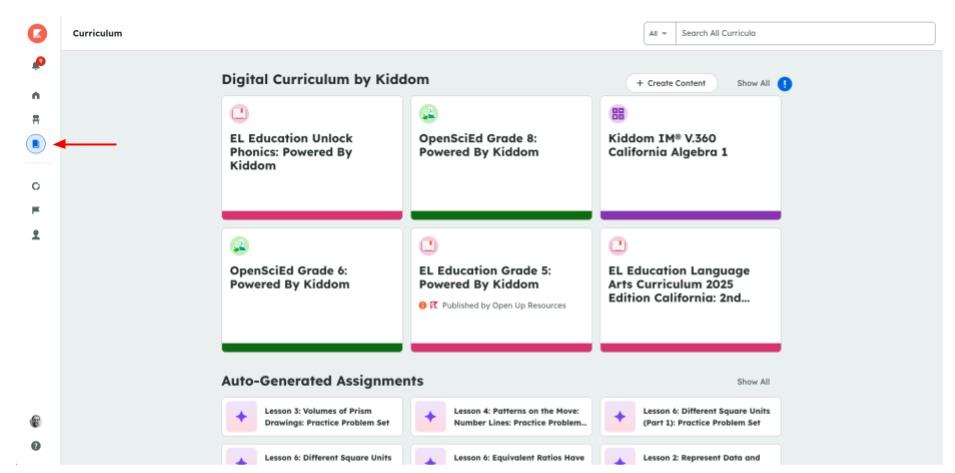
The Curriculum page is organized into sections that populate as you use the platform (you may not see all of them initially):
- Digital Curriculum by Kiddom: Published High-Quality Instructional Materials (HQIM) purchased by your school or district.
- Auto-Generated Assignments: Practice problems created using Kiddom's AI Practice Problem Generator.
- My Curriculum: Course tiles created by you or shared with you by colleagues.
- My Content: Activities and materials you have created from scratch.
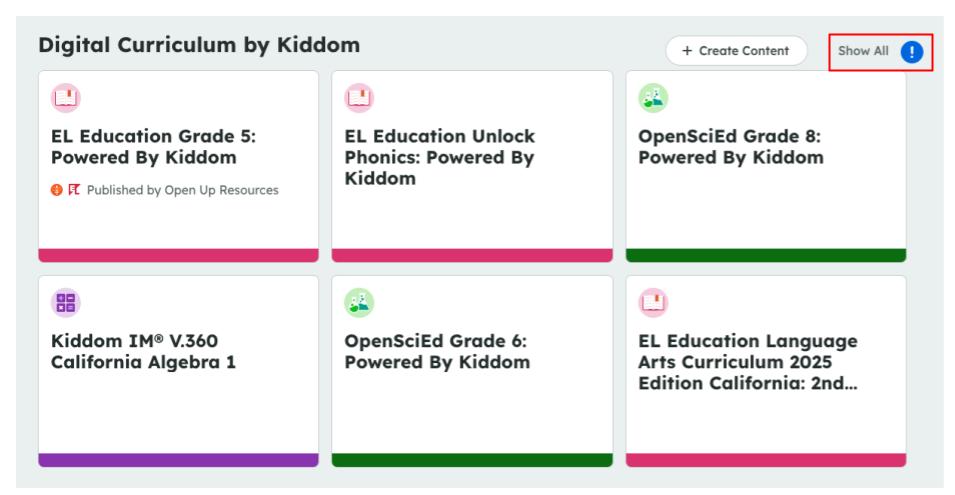
Each section initially displays the six most recently accessed tiles. Click Show All next to the section title to view all available materials.
Intelligent Search Capabilities
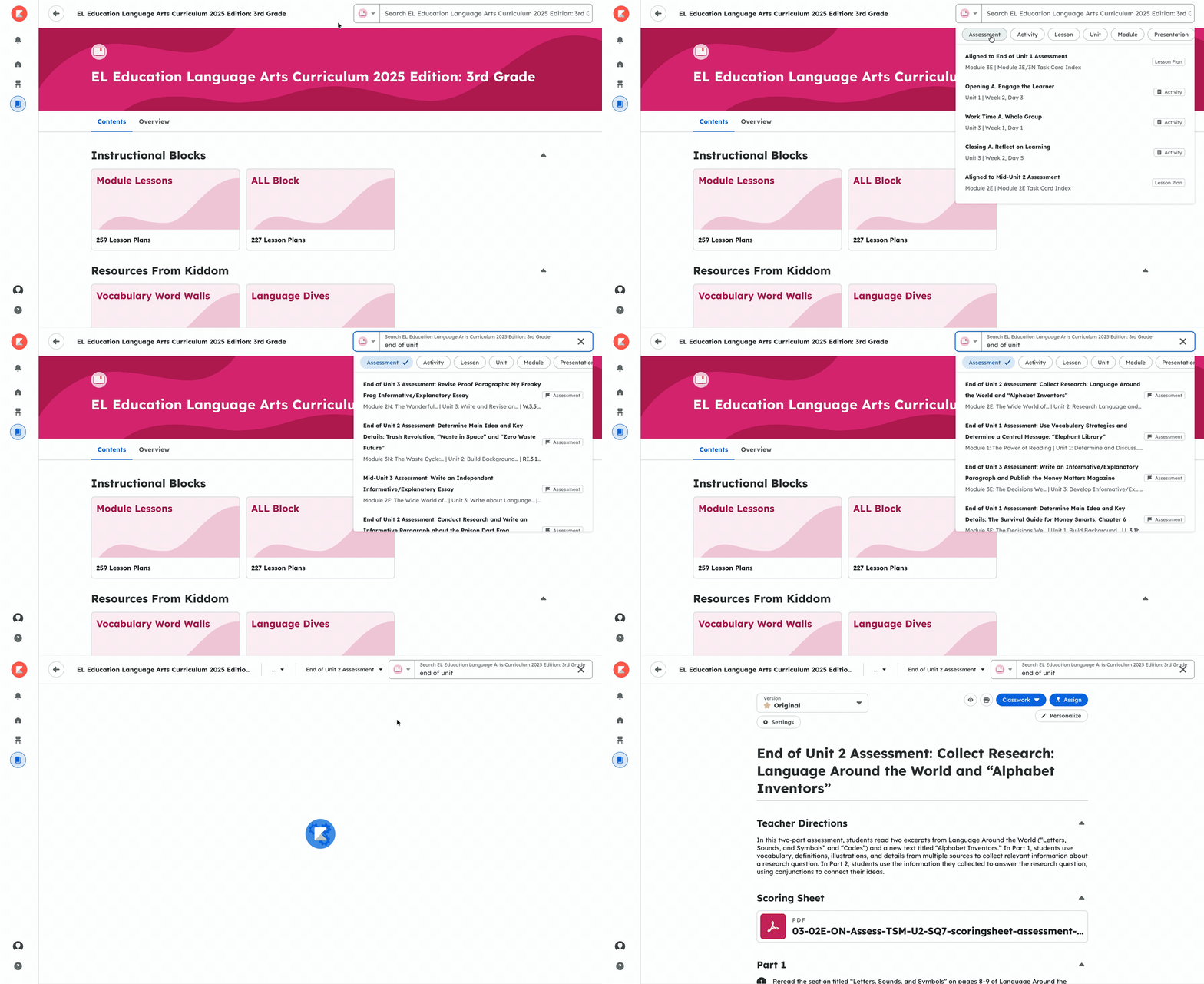
Kiddom's intelligent search uses your curriculum and everyday language to quickly locate the best lessons, printables, and assessments, helping you find resources faster. Teachers can search across their entire Curriculum library without needing to click through nested folders.
Key Search Features:
- Whole Curriculum Access: The search now covers the entire curriculum content, not just titles, allowing you to find granular items like specific lessons, centers, or resources.
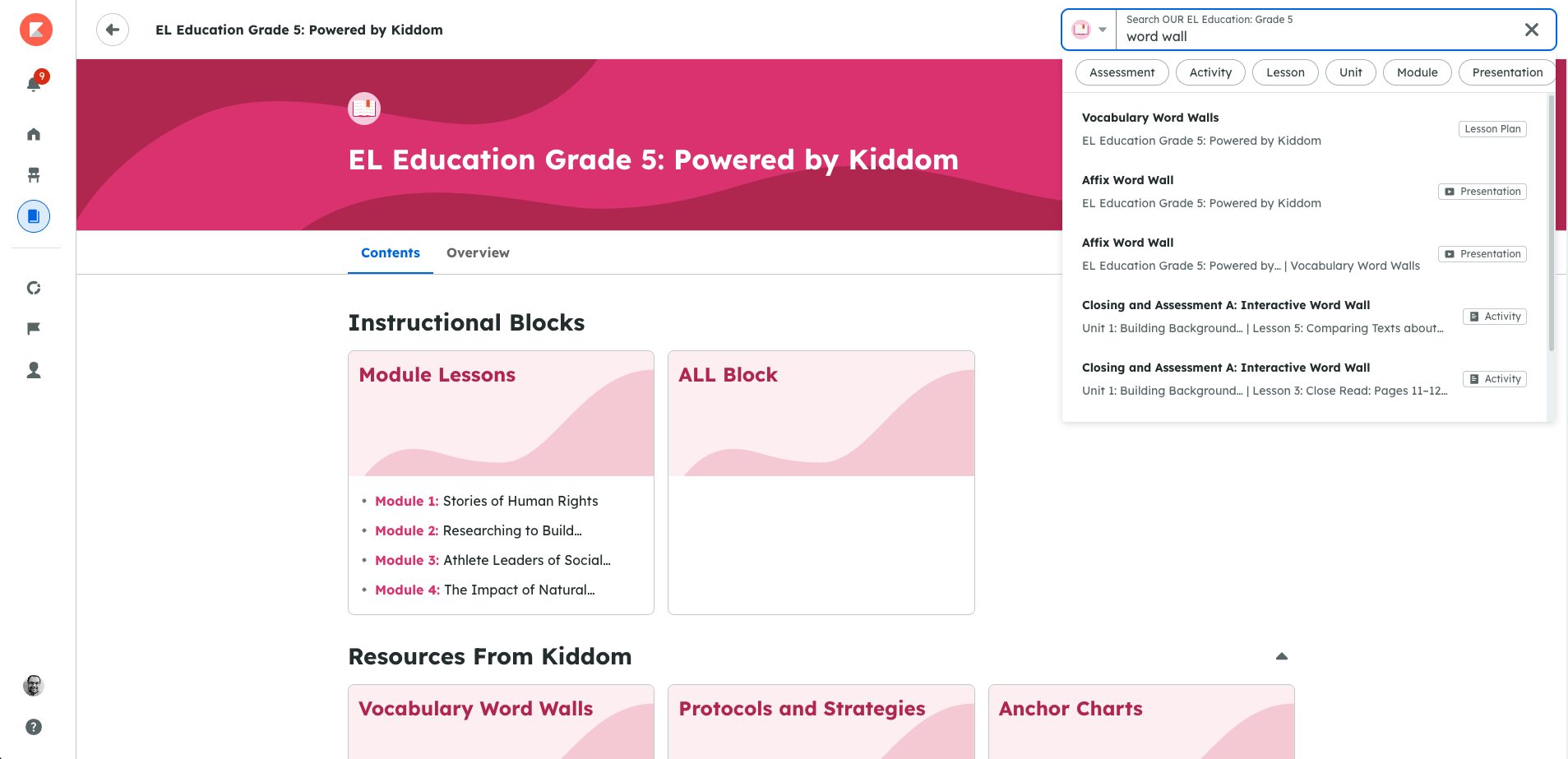
- Ubiquitous Search: The search bar travels with you; it is available at the top of the Curriculum Library and on all internal content pages.
- Predictive Searching: As you type, a dropdown overlay shows the 6 most relevant results, with an option to "Show More." Results clearly indicate the content's parent and grandparent location for context.
- Intelligent Interpretation: The search handles natural language queries, common misspellings, and partial matches.
- Prioritization: Search results prioritize content from curricula linked to your current classes, ensuring relevance.
- Filtering: Results can be narrowed by content type (lesson, module, attachment, presentation, or notebook). When inside a curriculum, the active curriculum is automatically selected as the filter scope.
- Bilingual Support: Search includes Spanish content for both search terms and results.
Watch this video to learn more about our new Search capabilities!
Navigating Within Your Curriculum
When you enter a grade level curriculum, you will see your core units or modules on the first page, with additional resources available as you scroll down. While the specific tiles may vary slightly depending on the published materials of each curriculum, the navigation process remains consistent across all of them.


Curriculum Overview
To view additional information about a course, module, or unit, click the Overview tab. This section is kept separate to be easily found by new users while remaining hidden for those who only need direct access to lesson resources.
Unit Pages
Clicking into a module or unit takes you to the Unit Page, where you will find:
- Lesson Plans
- Unit Assessments: These are now separated out for easier location.
- Lesson Presentations: Presentations are now available at the unit level, in addition to the lesson level, for faster access.
Navigation Aids
- Intelligent Search
-
Summaries: Brief summaries have been added to lessons, units, and modules to help you unpack the curriculum more efficiently.
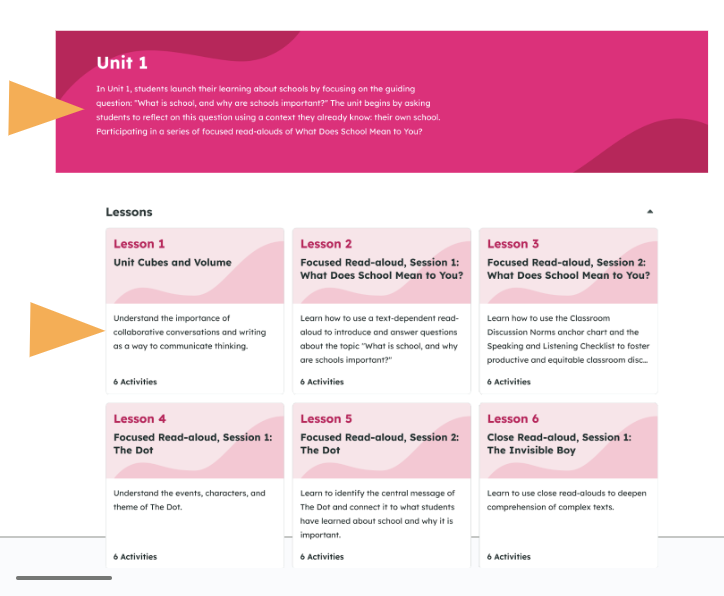
- Breadcrumb Navigation Bar: Use the Breadcrumb Navigation menus to quickly move between modules and units with fewer clicks. You can also navigate between lessons within a unit or to other units/modules.
Lesson Overview Pages
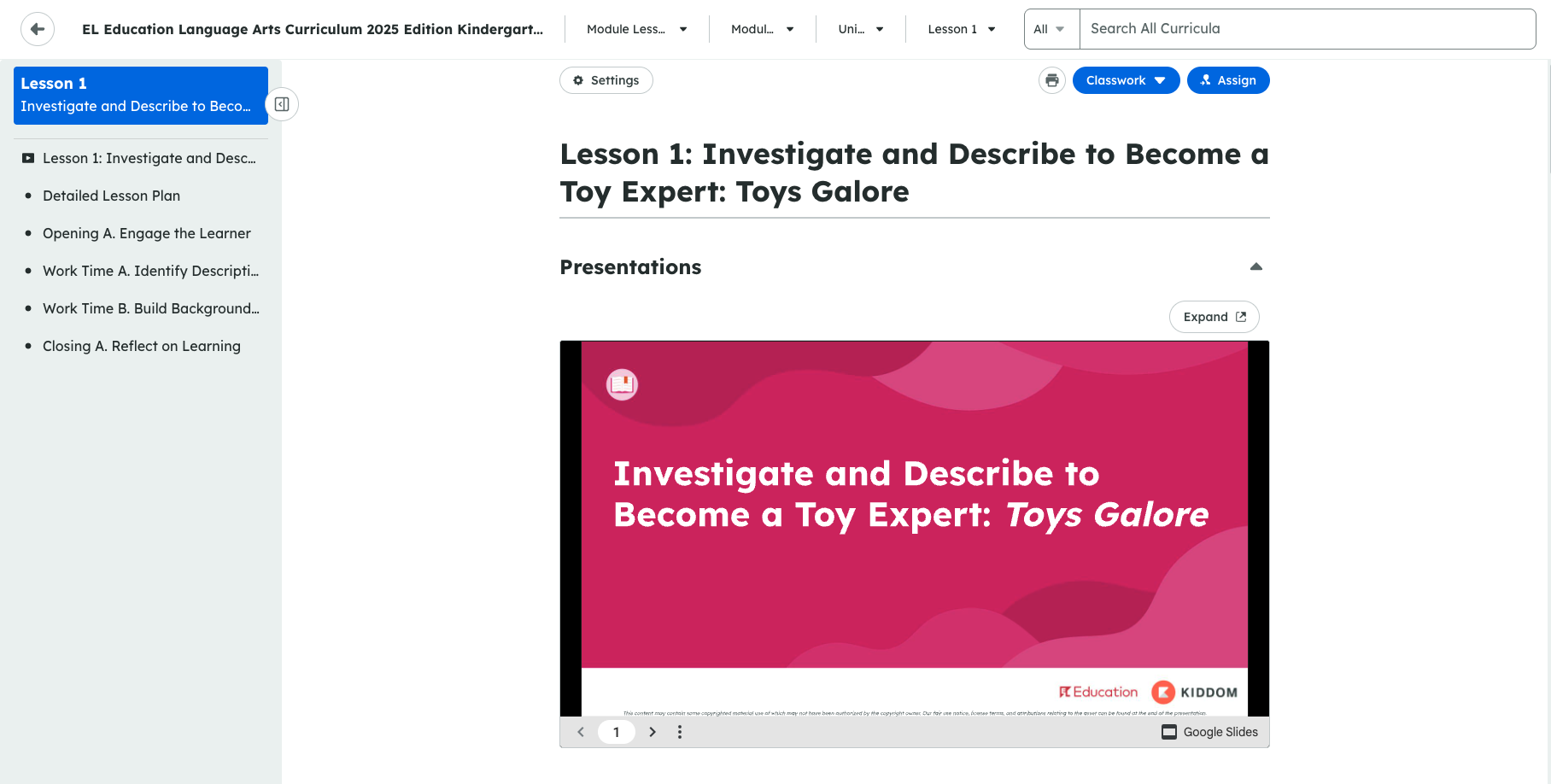
When a lesson is opened, the page is divided:
- Left Side (Table of Contents): Displays the lesson's presentation, assignable activities, and additional resources. Clicking an item navigates directly to it.
- Right Side (Full View): Shows the complete lesson overview, including the resources listed in the Table of Contents, along with teacher lesson plan notes and resources.
- Intelligent Search Bar: The intelligent search bar is also available on this page to quickly find other needed content.
Assigning Lesson Content
Assigning All Activities
On the lesson overview page, click the blue "Assign" button in the upper right corner to assign the lesson presentation and all student assignable activities in a single flow. Select your class(es), set your assignment settings (which apply to all content), and confirm.
You can also assign a whole lesson as live classwork using the blue Classwork button. (For more on this feature, see here).
Assigning Select Activities
To assign only specific activities, click on the desired activity in the Table of Contents or the lesson overview, and then click the blue “Assign” button on that activity's page. (To learn more about assigning activities, click here).