
What are Student Math Tools?
Kiddom provides math tools that empower students to demonstrate their knowledge using a collection of digital manipulatives and graphing capabilities.
Math Manipulatives (Grades K-5)
At the elementary level, we have a collection of seventeen remarkable elementary math manipulatives, powered by BrainingCamp. Digital manipulatives assist in math investigation and skill acquisition. Kiddom has 17 fully integrated, easy-to-use tools that unlock the fun of problem solving for elementary students!

These digital manipulatives are ready-to-use in questions throughout the curriculum. Teachers can also create their own questions using the manipulatives or add manipulatives to any existing question.
To add manipulatives to an existing question, create a personalized version of the assignment, then turn on the "Show Work" slider, select "Math Manipulatives" from the Toolset dropdown menu, and select the manipulative you want your students to use. Click here to learn more about creating personalized versions of assignments!

To create a question with manipulatives, create a new activity and add a question or personalize an activity and add the toops to a question by toggling the "Show Work" slider, select “Math Manipulatives” from the Toolset dropdown menu, and click on the manipulative you want your students to use. Click here to learn more about creating new activities and questions!

What Will the Students See?
When students access an activity that includes a question with a math manipulative, the question will appear at the top, followed by a box to type their answer and an applet of the manipulative to use for completion and a concrete explanation of the problem. Once submitted, the teacher will be able to see both the student's written response and an image of the work they completed using the manipulative.

Graphing Tool (Grades 6-12)
Graphing helps students organize, analyze, and interpret data. In Kiddom, we've partnered with the award-winning GeoGebra for graphing so secondary students can accurately construct mathematical representations of their thinking. Just like the manipulatives, these tools are also integrated right into Kiddom, allowing students to see and solve the problem on one screen using precise tools.

Teachers can create their own graphing questions by selecting "Graphing" as the question type and designing the graph by customizing the parameters.

Digital Protractor
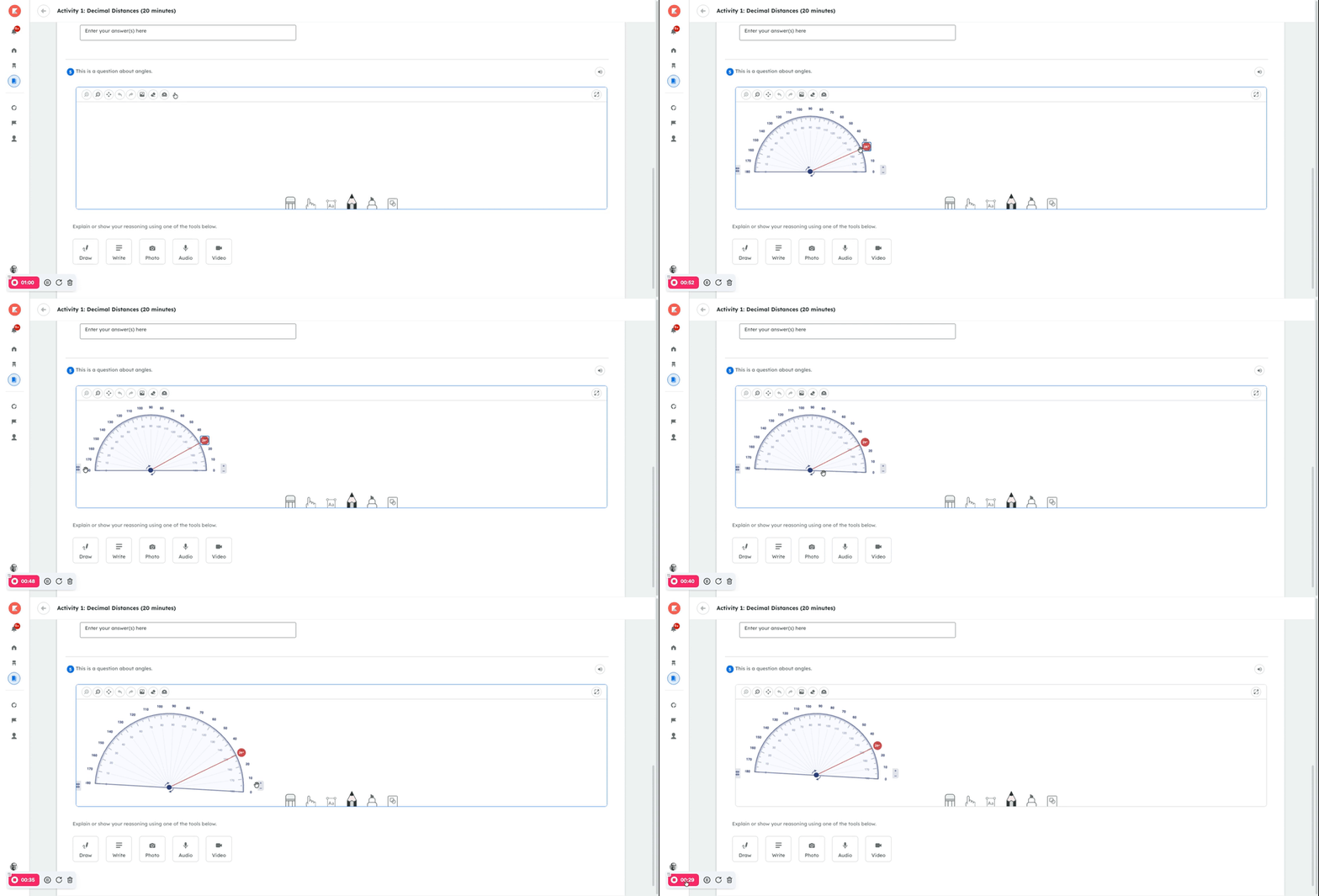
Students can now use a digital protractor directly inside Kiddom's drawing tool. Previously, students had to draw angles on paper, measure them with a physical protractor, and upload a photo or screenshot as their response. Now everything happens in the drawing tool: they draw the angle, position the digital protractor over it, and read the measurement in degrees without leaving the assignment.
How to Use the Protractor
Here are the features you can use with the digital protractor:
- Open/Close: Tap the protractor icon to turn it on. Tap it again to dismiss it.
- Move: Drag the protractor and place it right over the angle.
- Rotate: Drag the blue center to rotate freely, or use the arrows to rotate up or down.
- Resize: Use the + and - buttons to adjust the size until it fits just right.
- Measure: Drag the red badge along the arc to the other side. The degree value updates in real time as you move.
- Flip: Use the flip button to mirror the degree scale—handy depending on which direction your angle opens.
- Saving: If the protractor is open when the student saves, it will show up in the saved image. If it’s closed before saving, it won’t appear.
To learn more about additional Student Tools in Kiddom, click here!